
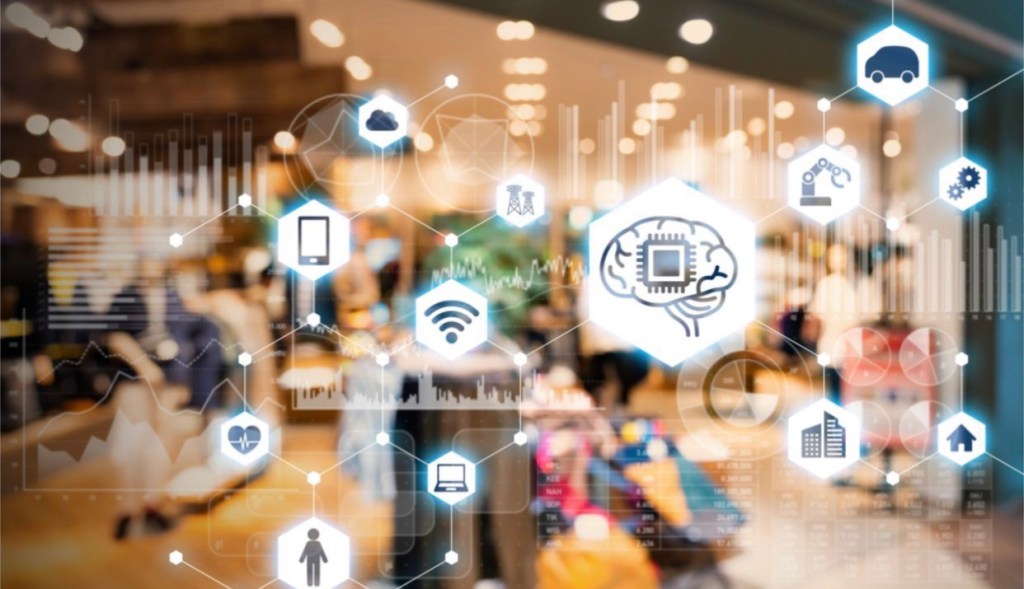
Traditional retail in most parts of the developed economies used to mean that consumers go looking for a product in a store. However, the situations is slightly different in most parts of Africa. As a matter of fact, in most West African economies, the consumer actually goes to an “open market” to look for a product.
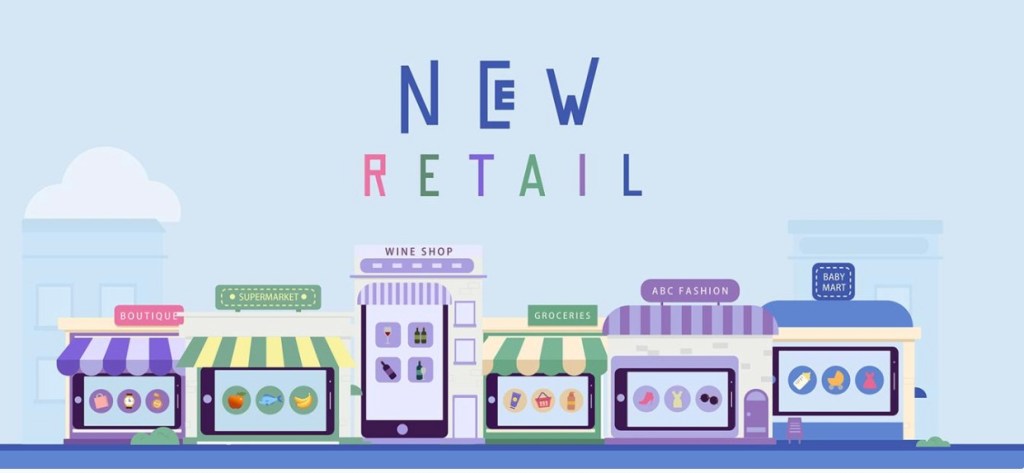
However, in the new age of digital, the storyboard has changed and today the product shows up to you, on your extended self, i.e., on a smartphone anywhere and at any time.
The smartphone is now much more than just a phone. Indeed, it can tell a more intimate story when it comes to you than even your best friend. No other piece of hardware in history, not even your brain contains the quality or quantity of information held on your phone: it ‘knows’ whom you speak to, when you speak to them, what you said, where you have been, your purchases, photos, biometric data, even your notes to yourself, according to Karina Vold, in her 2018 article. The article was based on the “Extended Mind Thesis” (EMT) (the philosophy of mind).
Typically, shopping involves either going to the shop or buying online and then the item showing up at your preferred location. It is important that both have it up and downside.
The “New Retail” concept as developed by Alibaba, is to seamlessly combine a great offline experience with a delightful online user experience to benefit both the consumer and the retailer. In other words, it is the disappearance of the boundary between offline and online commerce and the focus on fulfilling the personalized needs of each customer, as described by Jack Ma, Alibaba co-founder.
The new retail seeks to merge online with offline retail experience whiles bringing in data and analytics technology, media, entertainment and gratification along with the management of logistics.
Indeed, it’s seen to be “retail as entertainment” that is, playing games to win coupons and special promotions.
The best example is Alibaba’s internet and technology powered supermarket, Hema, a grocery chain.
At Hema, everything happens on the smartphone, which is from the Hema app. One can order for a preferred point of delivery (home or office), conduct an in-store product research, and proceed to payment. Payment can even be made with facial recognition, once your smartphone supports this feature. Hema’s innovation, is the ability for the stores to serve as a fulfillment centre for its online purchases.
This new retail concept is not only happening at Alibaba’s Hema supermarkets, but is also working with other brands such as Starbucks (the popular American coffee company with chains of coffeehouses) and Bose (predominantly known for audio equipment like speakers, headphones, etc). Other examples of brands are Intersports, and Wyeth.
These brands are now creating a new meaningful, touchpoint experience that engages shoppers.
Wyeth, LLC, (an American pharmaceutical company founded in Philadelphia, Pennsylvania, in 1860 by John Wyeth and his brother). It however merged later with Pfize in 2009. Wyeth teams up with up Tmail and uses catch the cat game to draw customers to its stores and builds a deeper connection through all kinds of engagement and entertainment while getting an accurate idea of who their customers are.
With the new retail experience, this will mean that there is no online or offline experience but rather business that has digitized, providing an innovative, intuitive, convenient and delightful shopping experience to all consumers at every touch point.
This new retail concept is in some ways different to the Amazon Go technology.
The Amazon Go technology is one of the world’s most advanced shopping technologies, which provides smart check out or cashier-less counter so the shopper doesn’t have to wait in line. In fact, this checkout-free shopping experience is made possible by the same types of technologies used in self-driving cars: computer vision, sensor fusion, and deep learning.
They also call it “Just Walk Out Technology”. The technology automatically detects when products are taken from or returned to the shelves and keeps track of them in a virtual cart. When you’re done shopping, you can just leave the store. Later, the shopper will be given a receipt and their Amazon accounts charged. As they say, no lines, no checkout.
Another digitized retail experience similar to Amazon Go is the collaboration between WeChat/Alipay and Bingobox. The Auchan Bingobox are small unmanned stores deployed across China that retail fast-moving consumer goods (FMCG) also known as Consumer packaged goods (CPG).
It is worth noting that this new retail is not just for the big brands but also smaller ones as Alibaba is digitizing the local convenient stores across China. Through its analytics platform, Ling Shou Tong (Alibaba’s B2B retail platform) is reinventing China’s convenience retail outlets by using a retail-management tool. Ling Shou Tong, which loosely translates to mean “Retail Integrated” is a tool being used to revamp the cramped and outdated convenience stores that are dotted along the streets and neighborhoods of China.
The programme doesn’t just give a cosmetic update to convenience stores, but rather, an extreme technology makeover which is injecting modern analytics to improve, streamline and automate operations that have long relied on elbow grease and intuition.
In conclusion, the shopping experience has changed. It is still however estimated that, 82% of shopping is still done in the physical space. A statistic which surely contributed to Amazon buying Whole Foods and deploying Amazon Go stores. As a matter of fact, it is for this reason that Amazon commenced the commercialization of its “Go technology”.
For this part of our world (Africa), a lot of opportunities lie within, for businesses to leverage on these new technologies. Practical examples would be to;
- Create a relevant retail experience for our open market as created by Alibaba’s and Hema’s retail experience.
- Leverage on mobile money as a platform and to offer software as a service (SaaS) to retail outlets to manage inventory and accounting.
- Leveraging on Financial technology to provide financial advisory and support to open market outlets.
Credit
This article was written with the inspiration and content from
• Tom Brennan – Managing Editor – Alizila, Alibabs Group.
• Karina Vold – Leverhulme Centre for the Future of Intelligence.
• Alizila.com and Alibaba Group
• Amazon.com
• Wikipedia.com

 Growth Journey By Frank A
The chief challenge with the digital retail shops in our part of the world is . The standard that you see in the shop is not the same standard when you receive the goods.
LikeLike