
What is Digital Transformation
Digital transformation is a foundational change in how an organization delivers value to its customers. That is redefining the entire business strategy and changing corporate culture. It’s viewing digital transformation as strategic competence and the development new business model at the back of technology that is moving from
• Physical to virtual
• New world and economy – that provides a lot of opportunities
Digital transformation is not just about disruption or technology or automation. It’s about value, people, optimization and the capability to rapidly adapt when such is needed through intelligent use of technologies and information
Requirements of Digital Transformation
• Organizational Alignment- Leadership & Cultural change
• Corporate Vision, Mission, and Strategy
• Data, Analytics & Business Process
• People – Capabilities, Skills & Roles
• Tools & systems
• Execution- Product & Service and Go-to-Market.
• Customer Experience
• Innovation
It is not just having technology strategy, automation or moving things in the Cloud
• It is the integration of digital technology into some aspect/areas of our life
• It is reinventing business and fundamentally changing how you do things or operate
• It has changed the way we deliver value to the customer
What digital allows
• You can talk directly to your customers whenever you want
• You can create different versions of your idea/product/experience and see how they perform
• You can test an idea and get feedback from 100s of customers in less than 24 hours
• You know exactly how much is the return on the marketing investment
• You can measure any step of the customer journey (awareness, consideration, conversion, loyalty & advocacy).
• You can define exactly who your product & service or ads should talk to
• Speed and faster time to market are mandatory to compete in the digital world
Digital Transformation has become the sine qua non of the modern era, why?
Why the Need for Digital Transformation
In 2017, 70% of mobile devices accounted for internet traffic. New world everything has moved into the Mobile Device. Mobile devices are making DIGITAL possible.
• Consumers/Customers
• Way of engagements or Channels
Acceleration of Digital Transformation is a result of
• Data
• Competition
2. Accelerating in Technologies
3. The mobile device is making digital possible
Data is now plentiful & usable ie REAL TIME data on
• Customer & Market
• Competition
• Company data (Internal) & Supply chain
Having the data and knowing how to use the data leaves you out of guesswork and opinion and brings intelligent options in the light.
The availability of data providers the opportunity to
• Do new things and do it better
• Doing the right thing and not just doing things right
Data is the new oil and China is the new Saudi Arabia says an AI, expert.
Opportunities Digital Transformation provides
• Innovation
• Compressive disruption & extinction
• New Business Models (Provide a level playing field)
• Strategic Competencies
Provides low-cost tools for individuals to compete with the best and brightest
– For a small business to compete with Major businesses
The benefit of Digital Transformation
Enabling inclusion in areas such as
1. Financial – the proliferation of Mobile Money Wallets instead of bank accounts. Access to saving & loans & other financial services.
2. Education including online schools and course
3. Social Impact Projects such as the Ministry of Gender, Children and Social Protection program for the poor called Livelihood Empowerment Against Poverty (LEAP)
4. Youth Entrepreneurship- Blogging, social media & online shops/ e-commerce platforms
New Business Models & Strategic Competencies must create New Experience (that is a new experience in)
1. Personalization
2. Engagement
3. Content
It’s critically important to note that Digital is not easy! …and also be ready to compete with new competitors
1. You must learn new Tools
2. You must know your Customers and your Potential
3. You must be ready to do More and Better
4. You are a Challenger in the Digital World
The disposition of the Digital Customer
• I am an individual
• I require Rewards for my loyalty
• Treat me like a human, you must know me
• Respond quickly, faster
• Be consistent across channels and seamless
• Tell me what you stand for
• Lastly, I will give you my personal data, but for something
• NB: It doesn’t matter what you do and how much budget you have: you must first know who your customer is
Understand this 3 pillars, if building a Product that Customer Wants
Value is key in the product or service must solve a critical problem.
Firstly, you need to direct observation of the customer, this is critical to ensure you build a product that they will be happy to pay for
1. Use cases of Products and Services
2. Misuses of Products and Services
3. Workarounds from customers
4. Problems faced by customers
5. Reasons for buying
6. Environment and emotions that influence customer’s behavior
7. Contradictions in customer behavior
Secondly developing a Value Proposition Canvas is key to success. The Value Proposition Canvas is a tool that can help ensure that a product or service is positioned around what the customer values and needs. The Value Proposition Canvas was initially developed by Dr. Alexander Osterwalder as a framework to ensure that there is a fit between the product and market. It is a detailed look at the relationship between two parts of the Osterwalder’s broader Business Model Canvas; customer segments and value propositions.
The Value Proposition Canvas can be used when there is need to refine an existing product or service offering or where a new offering is being developed from scratch.
Thirdly, Ensuring Product Market Fit
According to entrepreneur and investor Marc Andreesen, who is often credited with developing the concept, product-market fit means finding a good market with a product capable of satisfying that market.
There is no point in spending in Digital Marketing, if the product doesn’t have the Product Market Fit
The need for New tools & Systems
To develop and manage digital products, you create a digital culture and also learn how to use new tools/system.
Product Design Approach
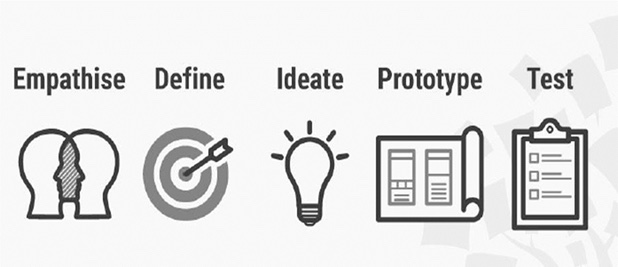
Design thinking approach must be followed for any Digital Product or Project
Digital Product Process
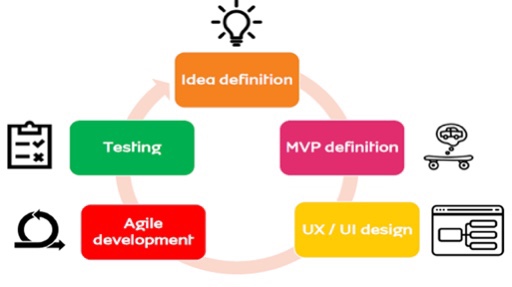
The development of a Digital Product never ends
Leading Digital Transformation
1. Manage diversity – motivation
2. Integrity – laws or morals
3. Ethical – decision and artificial intelligence
Building an Effective Digital Strategy, what you need to do…
1. Define your “Why?“
a) Why do you exist as a business
b) What problem are you solving as a business
c) Create your Brand Story and make a mantra
2. Plan Resources
a) Man- staff
b) Machine – digital tool & systems
c) Money- capital
3. Define your Goals (SMART)
a) Acquisition
b) Retention
C) Engagement
4. Develop Audience Personas( that is 3-4 persona)
5. Create A Journey Map
a) Where is the first touch point
b) What are our touch point – offline and online (channels)
6. Identify Key Channels
7. Develop a Content Strategy
8. Implementation plan with timeline
9. Measurement & Prediction
Credit: This article was written with the inspiration and content from
Jeff Rum Founder + CEO, Ignite Digital Strategy Group Inc.
Dario Bianchi, Head of Digital, MTN Ghana
https://www.i-scoop.eu/digital-transformation/
https://www.b2binternational.com/research/methods/faq/what-is-the-value-proposition-canvas/

 Growth Journey By Frank A