
It’s really difficult to design products simply by focus groups. “A lot of times, people don’t know what they want until you show it to them.” – This is the famous quote from the legendary Steve Jobs, the American inventor, designer, entrepreneur, co-founder, and one time chief executive officer and chairman of Apple Computer.
Design, like many other topics has different meanings to many, depending on one’s experience. Every individual has their own understanding of what design is and what the role of designers should be. Within the design experience field, there are so many specializations within design roles — interaction designer, visual designer, information architect, motion designer, prototyper — and these roles can have overlaps with other domains such as marketing, architecture, industrial design, and even sound design.
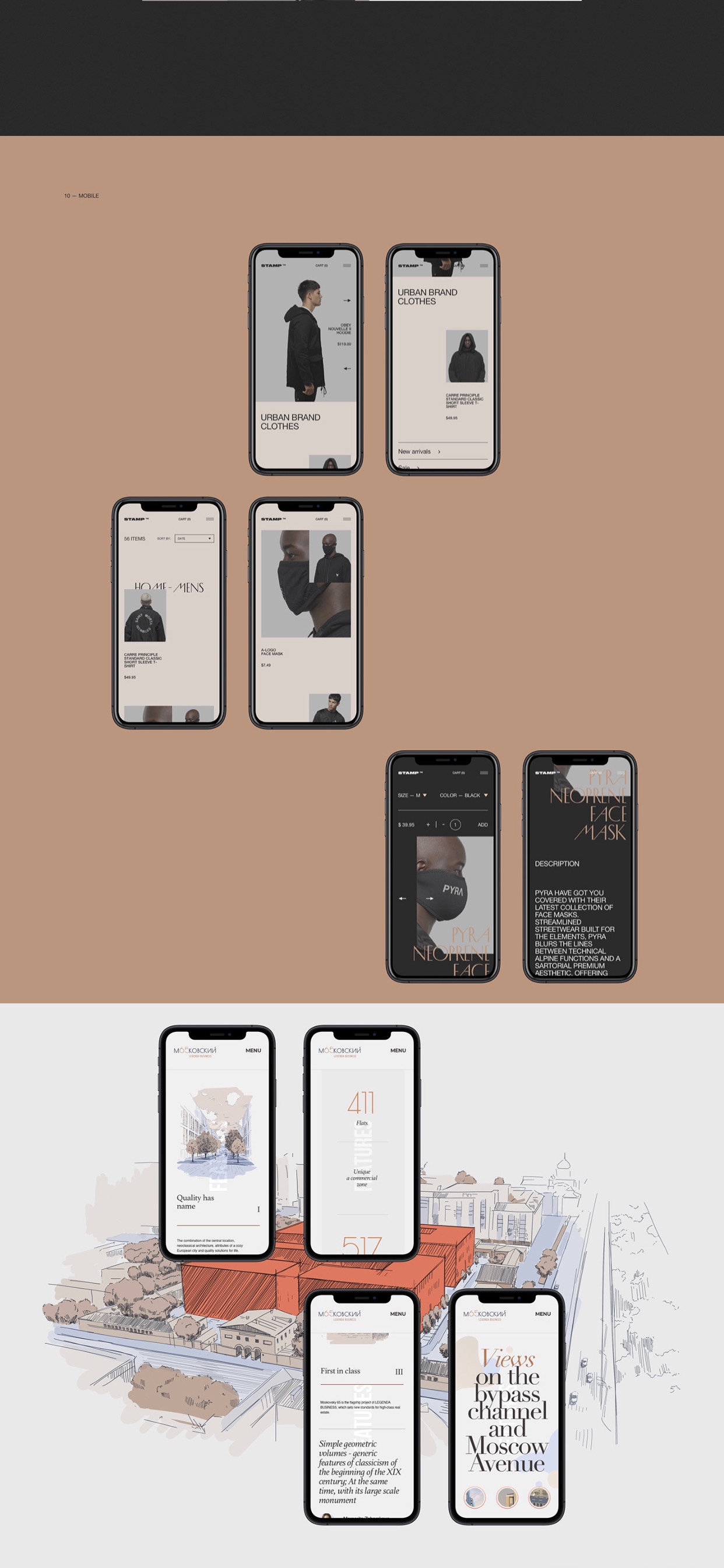
Stamp by Kivill Kim & Maison 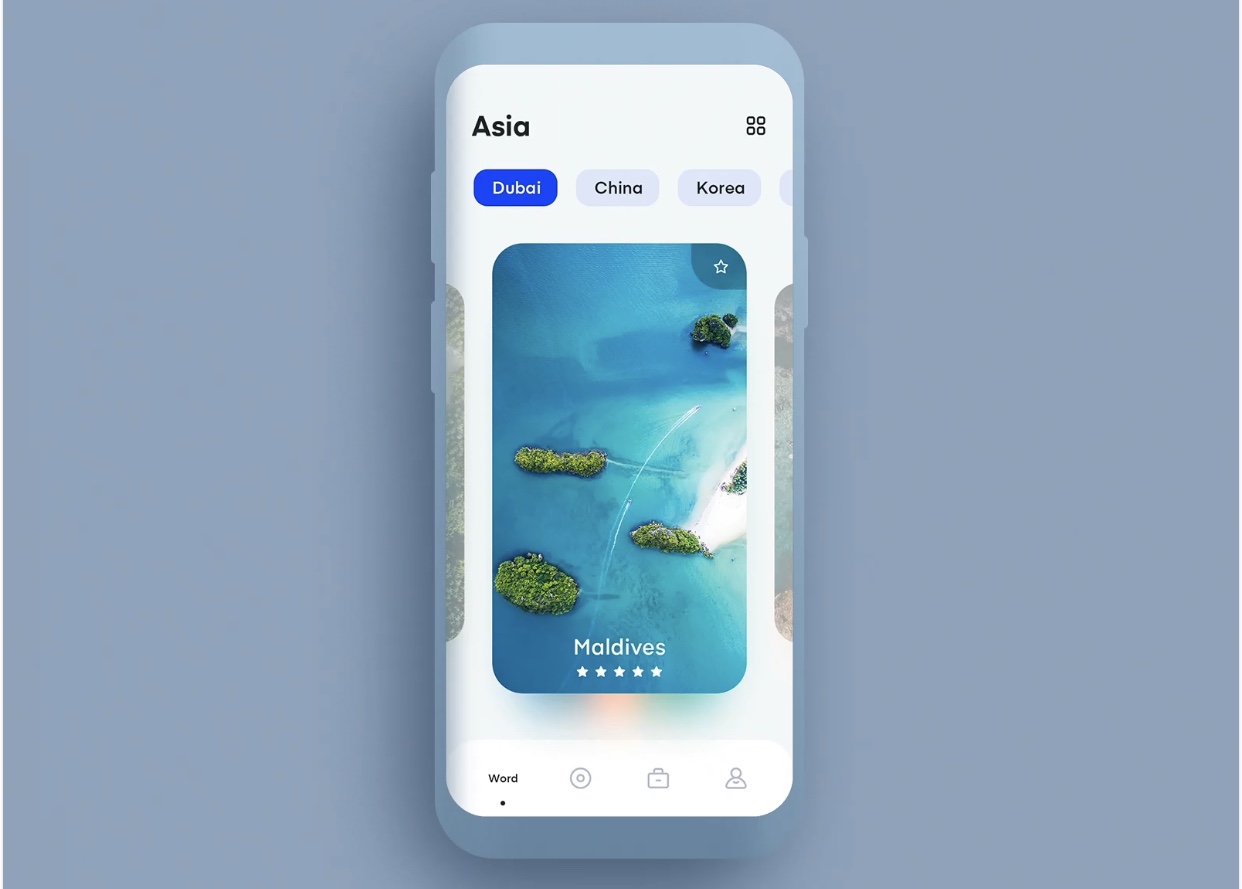
Avtar Singh
Jobs explained that some people say to listen to the customer and give them exactly what they want, but he believed that the best approach which he took, was to forecast and implement what the customer wants, even before they knowing they wanted it. Henry Ford also once said, “If I’d asked customers what they wanted, they would have told me, a faster horse!” People don’t know what they want until you show it to them. That’s why I never rely on market research. Our task is to read things that are not yet on the page.
However, Chunka Mui, a futurist and advisor on innovation and author of the book Billion-Dollar Lessons: What You Can Learn from the Most Inexcusable Business Failures of the Last 25 Years, in his October, 2011 Forbes article slightly disagreed with Jobs and Ford and proceeded to call such school of thoughts: “a dangerous lesson.“ To be clear, Mui, doesn’t discount Steve Jobs’ statements as unimportant but rather emphasized the fact that going on that will prove to be a huge risk and that people will have to resist the temptation to be like Steve Jobs.
Prof. Clayton Christensen, the American academic and business consultant on innovation also confirmed and agreed to an extent, with Steve Jobs assertion at his key note – Talk at Google on the topic “Where Does Growth Come From”. He indicated that most of the time, consumers don’t know what they want or need, in fact they don’t understand their own behavior.
However, he makes the point that knowing your customer is key for any business endeavor. Successful business owners understand what their customers and the customer behavior is.
Indeed the depth of knowledge of customer behavior is crucial to building products the customer wants.
The solution to a discomfort is found in the use of a product in building digital products the customer wants, that is, we will have to create or harness habits that align and target customer behaviors.
In his book, Hooked: How to Build Habit-Forming Products, Nir Eyal, the behavioral designer and author defines habit as “a behavior done with little or no conscious thought”.
He also defines ‘Hooked’, the title of his book as an experience designed to connect the user’s problems to a solution, with a frequency to form a habit.
The book explains the 4 pillars of the hook model and they are:
1. Trigger
2. Action
3. Reward
4. Investment
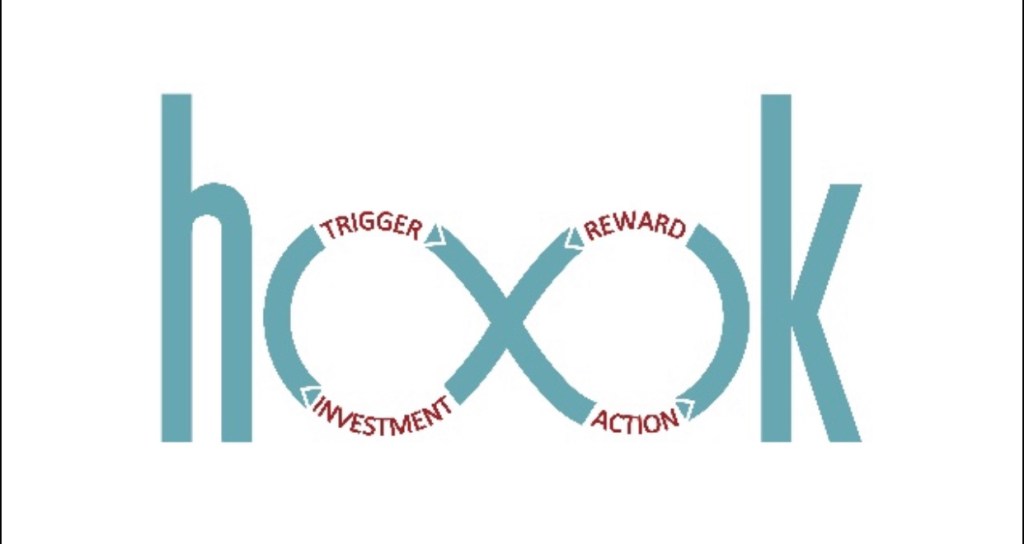
Book by Nir Eyal
How to build a hook:
1. Trigger
There are 2 types of triggers, that is, external triggers and internal triggers.
o External Triggers are the information which tell the consumer what to do next. These includes all forms of advertising of the product, the digital space, the colorful call to action and the information in the user interface (UI).
o Internal Triggers are the information which suggest what to do next and it is activated through an association in the user’s memory. For example, causing the user a memory of people, places, emotions, routines and satiation they have previously experienced.
Eyal makes the convincing point that negative emotions such as indecisiveness, tension, inferiority, fatigue, boredom, confusion fear of loss, dissatisfaction, powerlessness and discouragement are all powerful internal triggers. For example, if we are unsure of something and we want answers, we normally google or when one is bored, you’d normally go on Facebook, Instagram, Tiktok or one of these other social networking sites. These triggers are all internal.
So therefore, I pose this question to you, do you know your customer’s internal triggers???
2. Action
Action is a noun, meaning the process of or state of acting or of being active; to get something done or performed. Actions can become habits or usual acts of conduct: (source dictionary.com)
For the digital product space, it is critical for the product to reward when an action is taken. In other words, there is the need to create a habit for the simplest action, in anticipation of a reward to follow. Great examples of rewards are “scrolls”, “feeds” and search and play which is found in most digital products. For an action or behavior to occur, we need MOTIVATION, ABILITY, and a TRIGGER, according to Dr. BJ Fogg of Stanford University. That is M=A+T.
Motivation is the energy for an action as defined by Edward Deci.
Dr. Fogg makes the point that there are 6 factors that can increase motivation and these factors include:
1. Seeking pleasure
2. Avoiding pain
3. Seeking hope
4. Avoiding fear
5. Seeking acceptance
6. Avoiding rejection
He defined Ability also as the capacity to do a particular action and stated that there are 6 factors can increase or decrease ability and these are:
1. Money
2. Time
3. Physical effort
4. Brain cycle
5. Social deviance
6. Non-routine
Triggers we have already explained in the foremost text and the only way to increase their usability is to start with triggers that call to action.
3. Reward
According to Eyal, there are 3 types of variable rewards that habit-forming tech users have addiction to. These are:
1. Reward of the tribe – these are social rewards. Things we feel good about and normally comes from other people, example is having likes on social media posts.
2. Reward of the hunt – these are rewards from the search for information and other material resources. It excites us to use search and find results for our search. The use of slot machines in casinos is an example. In addition, today, technology has introduced feed/ scrolls in almost every app.
3. Reward of the self- these are intrinsic, feel good incentives that doesn’t involve others but rather leveling‐up to reflect mastery and competency. Example in games like pokemon go, candy crush.
4. Investment
This is when the user is made to invest money, time, effort, emotional commitment and personal data in the product. The idea behind investment is that when users all these factors, they are then more likely to stay. For example, the more information they put on the app, the more likely they are to reuse the app.
In other words, investments in tech products are stores of value and also erects barriers to exit.
In conclusion, Nir Eyal makes the arguments that the myth about the best products or technology win is not true unless the product captures the monopoly of the mind through the hook model, which is Trigger, Action, Reward and Investment.
It is crystal clear we will need to understand our users’ mindset in order to motivate and create their ability to react or take action when we send some triggers. It is however also critical to appreciate the fact that users don’t always know what they want and as product developers/managers and marketers, we are able to influence behaviors and therefore we must begin to influence for the greater good of humanity.
Credit: This article was written with inspiration and content from
• Nir Eyal – author, lecturer and investor known for his bestselling book, Hooked: How to Build Habit-Forming Products.
• Reena Merchant, design leadership and experience strategy – Profile and Portfolio
• Steve Jobs, the American inventor, designer, entrepreneur, co-founder, chief executive and chairman of Apple Computer.
• Chunka Mui, a futurist and advisor on innovation and author of the book Billion-Dollar Lessons
• Prof. Clayton Christensen, American academic and business consultant and developer of the theory of “disruptive innovation”.
• Dr. BJ Fogg of Stanford University

 Growth Journey By Frank A