
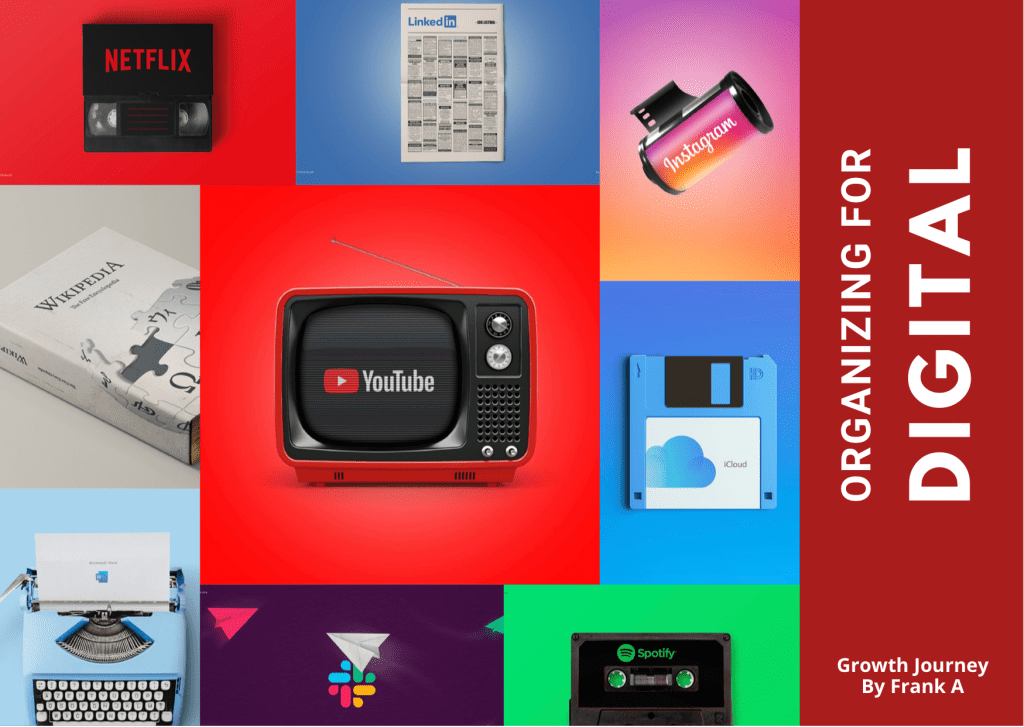
The pace at which various technologies such as the smartphone, the Internet of things, big data, artificial intelligence and machine learning, robotics, 3D printing, biotechnology, nanotechnology, renewable energy, satellite and drone services have changed fundamentally in their delivery of goods and services to customers is breathtaking.
It used to be that, to be extremely successful in the marketplace, companies had to embrace a competitive strategy. That is, the generic competitive strategies from authors Michael Treacy and Fred Wiersma. These two authors in their book “The Discipline of Market Leaders (1997) described three generic competitive strategies namely:
1. Operational Excellence
2. Customer Intimacy
3. Product Leadership
The Generic strategies
• The goal of an operational excellence approach is to achieve cost leadership. In order to streamline operations and minimize costs, the primary emphasis here is on automating production processes and operating procedures. The approach lends itself to high-volume, transaction-oriented and streamlined manufacturing that needs little distinction. Example Shoprite, Melcom, etc
•The strategy of customer intimacy focuses on delivering a unique range of customer services that enable service personalization and product customization to meet various customer needs. Companies that employ this approach also package services and goods into a “solution” specifically tailored for the particular client. Example Zappos, Disney parks etc
• As a competitive strategy, product leadership seeks to create a culture that consistently brings superior products to the market. Product leaders usually achieve premium market prices thanks to the experience they create for their customers. Example apple iPhone.
However, these generic strategies are not enough for digital consumers in the 21st century. The new digital consumer says they like self-service control, but they also want easy access to help. In addition, they are also mobile-first, but also want access to other omnichannels. Indeed, there are more Omni channels, now, than ever before. chatting is what they prefer, but they say, it’s really important not to forget agent touch to a product or service, and oh! chatbots are also where it’s at as well. They also say that you (the company) needs to keep them safe, but also show them the solutions to their issues. They want to be part of a mission, a culture, a community, and ultimately, be transparent as a business.
These have led to brands putting a lot of focus on the offline touchpoint as much as they put on their online. Products have become services and services turning into experiences and memories.
The Gutenberg Moment
With these complexities, how does one organize for the new digital world? But before getting into that, a look at a few “Gutenberg moment”. By the way, a Gutenberg moment is one that changes the way we produce and consume text as dramatically as Gutenberg’s machine did with the printing press.
Ray Kurzweil the author of “The Age of Spiritual Machines” and “The Singularity Is Near”, …explains that if you take over any domain or discipline or industry or product area and transform it with information technology, it acquires information flow properties and is democratized. Again, the doubling trend of this domain explosion is constant, and most notably, after the doubling pattern begins, it doesn’t end, it only keeps moving and moves exponentially. For example, a smartphone today (the year 2020) in the hands of a 16-year-old, anywhere in the world, has more computing power than the entire US government had in the 1980s due to chipsets and components available today. Also, the price performance of the smartphone has dropped. In other words, the Motorola DynaTAC; the first commercially available mobile phone made in 1983 and commercially released a year later at $3,995, it will be an equivalent of $9,831 by now, was very expensive, then and could only make a phone call. It is however important to note, that in the year 2020, premium smartphones are selling at about $1200 and has more computing power than ever before. Today, it does more than make calls and browse the internet. It can display weather and temperature information, voice dictation and take notes, has virtual assistant such as Siri, Google Assistant, or Cortana. Access utilities, such as a flashlight, e-book reader, and calculator etc.
In addition, our world saw an exponential transition with the introduction of products such as the Kindle and the iPhone which is a physical product, but the revenue generation and value-creation is on the digital side, meaning the business model had changed. Then with the exponential increase in the use of mobile devices and the internet, we now have entire new Industries and companies such as YouTube, Wikipedia, LinkedIn, Spotify, WhatsApp, Wechat, Tiktok, Snapchat, Instagram, etc that have completely no physical manifestation but are entirely digital. Again you have cars such as Tesla with computers and sensors in them, that are completely digital, and then we call it, a computer with wheels. No! Make that an “app with wheels.”
In the area of business model change, this is what, we went through with the move from film photography to digital photography.
In film photography, which was operating on a materials scarcity business model. It had a crush,
when the world moved to the digital environment where the fundamental dynamics exploded because we started taking millions of photographs with our smartphone or devices.
The problem space changed from paying for a couple of pictures that, you receive in a week, to you have 100’s of the same picture on your phone. The Business model then changes to, creating an app that you give out for free and monetize by selling premium features of the same app.
Organizing for digital
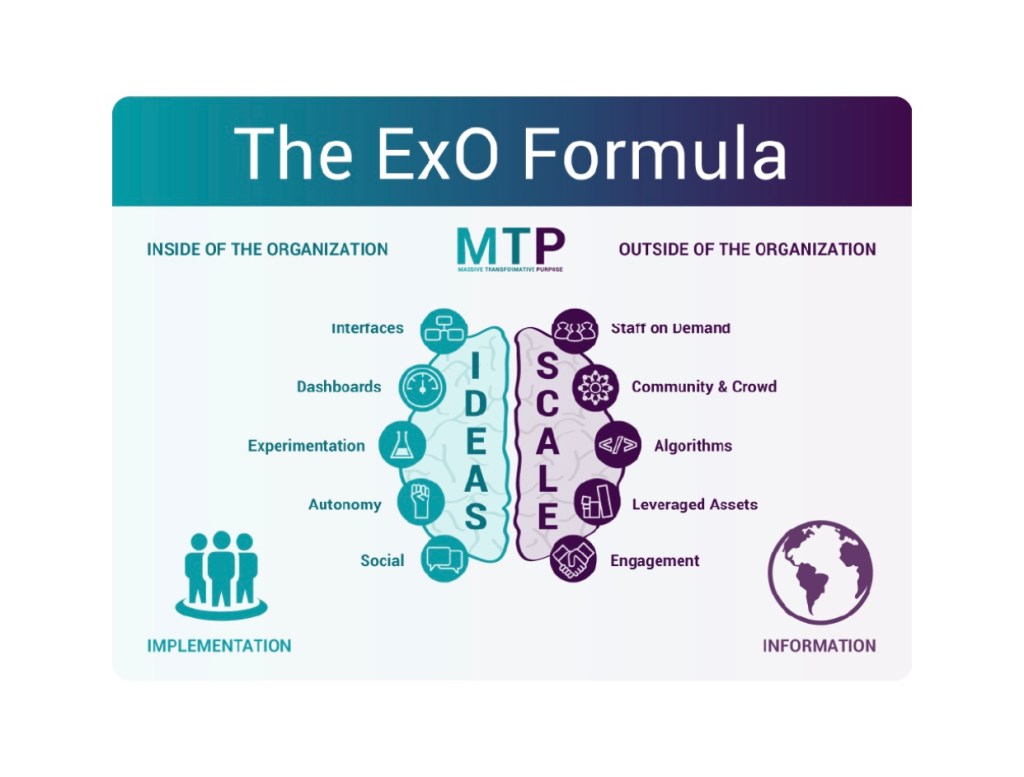
Salim Ismail, author of the book “Exponential Organizations”, makes the argument that one (organization or individual) needs to explore 3 domains in other to organize for digital, which includes
1. MTP
2. S.C.A.L.E
3. I.D.E.A.S
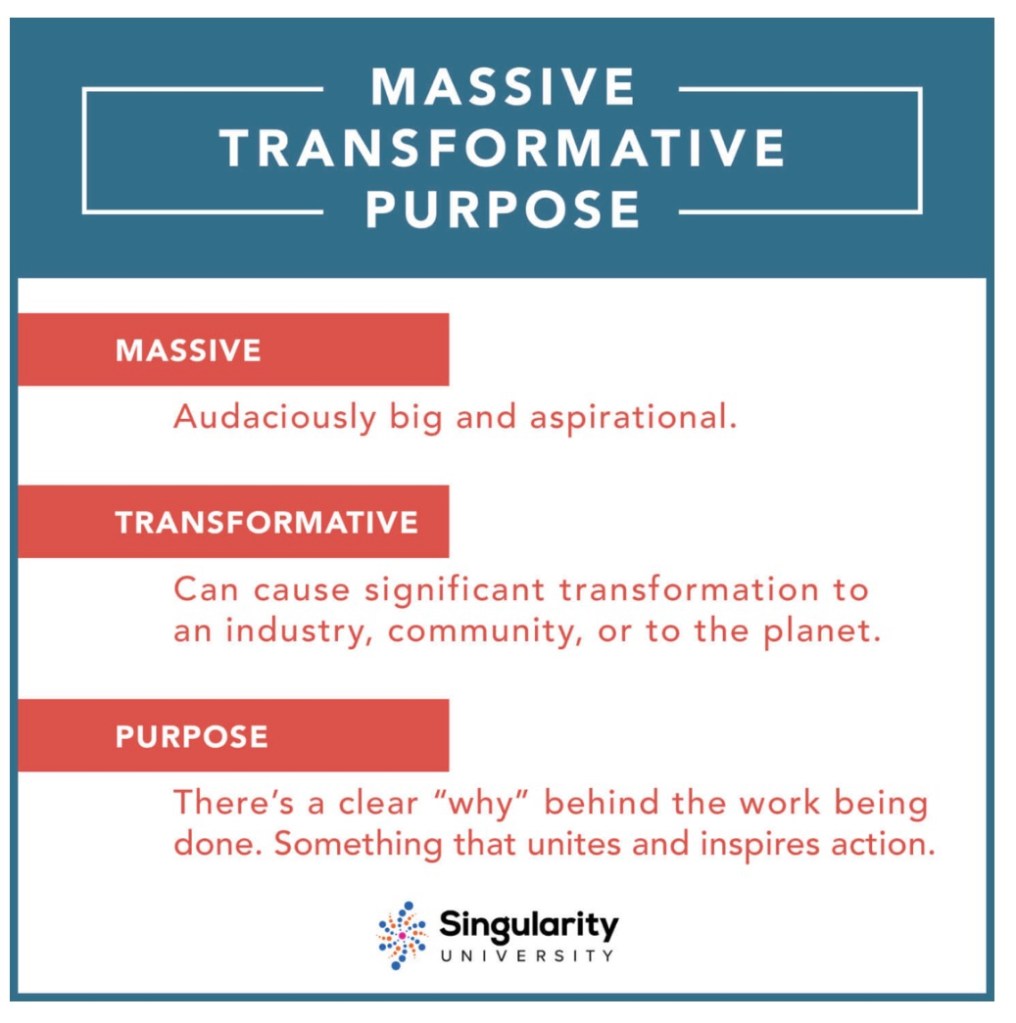
1. MTP or Massive Transformative Purpose. MTP is a “highly aspirational tagline” for a person or a collective, such as a business, agency, culture, or social movement. It’s a giant and bold declaration of intent. Elon Musk and SpaceX are a clear example of how one should understand MTPs. MTP is: Huge and aspirational, Clearly focused, Unique to the company, Aimed at radical transformation, Forward-looking.
2. S.C.A.L.E, a group of five external attributes focused on connecting and keeping abundance:
• Staff on Demand: Relies on a pool of prequalified workers hired on an as-needed basis, to conduct operational elements of your core business. Good examples of Staff on Demand are Bolt, Uber drivers
• Community & Crowd: Communities are made up of a large global group of individuals (or entities) who are passionate about your MTP and are directly involved in the main functions of your organization. They are loyal to a shared goal and devoted to solving the grand challenges surrounding your organization‘s MTP. An awesome example of community implementation is TED’s community, which is the main engine of this great global movement.
• Algorithms: To automate what people do, so the business grows without the increasing staff at the same pace. Algorithms allow products and services to be fully scaled and improve quality by finding better solutions to problems–through decision support systems. Also, algorithms provide organizations with new capabilities that not even humans would be able to provide, so it’s not only about automation but also about doing new things that weren’t possible before. Examples of algorithms everywhere, are Facebook’s, LinkedIn, Twitter’s algorithm etc, that decides what’s the content we will read next (selecting amount thousands of possibilities every time that shows something on-screen).
• Leveraged Assets: Like Staff on Demand, the Leveraged Assets attribute gives you on-demand access to resources, replacing the need for ownership. This also allows the organization to become much more dynamic, flexible, and grow as much as needed quickly. The best example of leveraged assets may be Airbnb, which is already the biggest hotel chain in the world and owns no hotels, nor rooms.
Engagement: The use of techniques such as reputation systems, gamification, loyalty programs, and incentive prizes to keep these groups interested, involved, and increasingly committed to your shared purpose. Example Zombies run.
3. I.D.E.A.S, a group of five internal attributes focused on managing abundance to grow:
• Interfaces: The main idea is to make the complex simple, and it can be either what your users interact with or what other systems interact with. For users, the user interface (UI) is the visual part of the software application that they see and the user experience (UX) is the way they interact with the system. For systems, application programming interfaces (APIs) are the code-based connections your systems will have with external (or internal) systems in order to gather and exchange data and functionality. Examples of great interfaces and user experience are Airbnb, which can manage millions of places to stay in a super simple user interface.
• Dashboards: It provides the real-time information you need to run your business. It’s not about how to show the data (this is not new) but about what’s the type of data that should be shown. An example of a great type of data to include into a dashboard is Innovation. Accounting systems, which provide us with information about the progress we are doing towards the innovation process and whether we are learning or not will be a good start.
• Experimentation: The activity of validating assumptions before making significant investments into the organization or new ideas. Each experiment creates a set of learnings that can be used to improve products or services. Great techniques to implement here are to learn startup or customer development, which will allow us to find out what’s the right value proposition and business model that fits the market.
Autonomy: The use of self-organized, multi-disciplinary teams that operate with decentralized authority. Autonomy can be also applied to staff on-demand or even users, providing them with the freedom to operate more independently, thereby offering the organization greater potential for exponential growth. One of the best ways to generate autonomy is by implementing an OKR system where teams can define their own way to achieve its goals, while we can also implement a dashboard showing the OKR system that provides real-time information and transparency across the organization.
• Social Technologies: It is about improving internal operations by encouraging social interaction via technology–which includes communications, collaboration, and workflow–and exploring how to do this well. There are plenty of tools that allow us to increase internal communication inside the company, one of them is Slack, Microsoft teams, WhatsApp, etc. Also, it’s important to implement customized ways to allow users, providers, and our community in general, to talk among themselves. A great example of this is Airbnb, which allows travelers and owners to talk between them even before renting the place.
From the exposition shared above, one cannot help but to agree that technological changes are like chameleon. They will keep metamorphosizing based on the requirement of the environment. For that matter the earlier we brace up for it, so we keep in tune with the times the better.
Credit: This article was written with the inspiration and content from
- Salim Ismail, author of Exponential Organizations, Founder of ExO Works and Open ExO and Executive Director of Singularity University
- Raymond Kurzweil the author of “The Age of Spiritual Machines” and “The Singularity Is Near”
- Peter H. Diamandis founder, author of Abundance: The Future Is Better Than You Think and BOLD: How to Go Big, Create Wealth, and Impact the World.
- Singularity University
- Wikipedia

 Growth Journey By Frank A
Digitization!
LikeLike